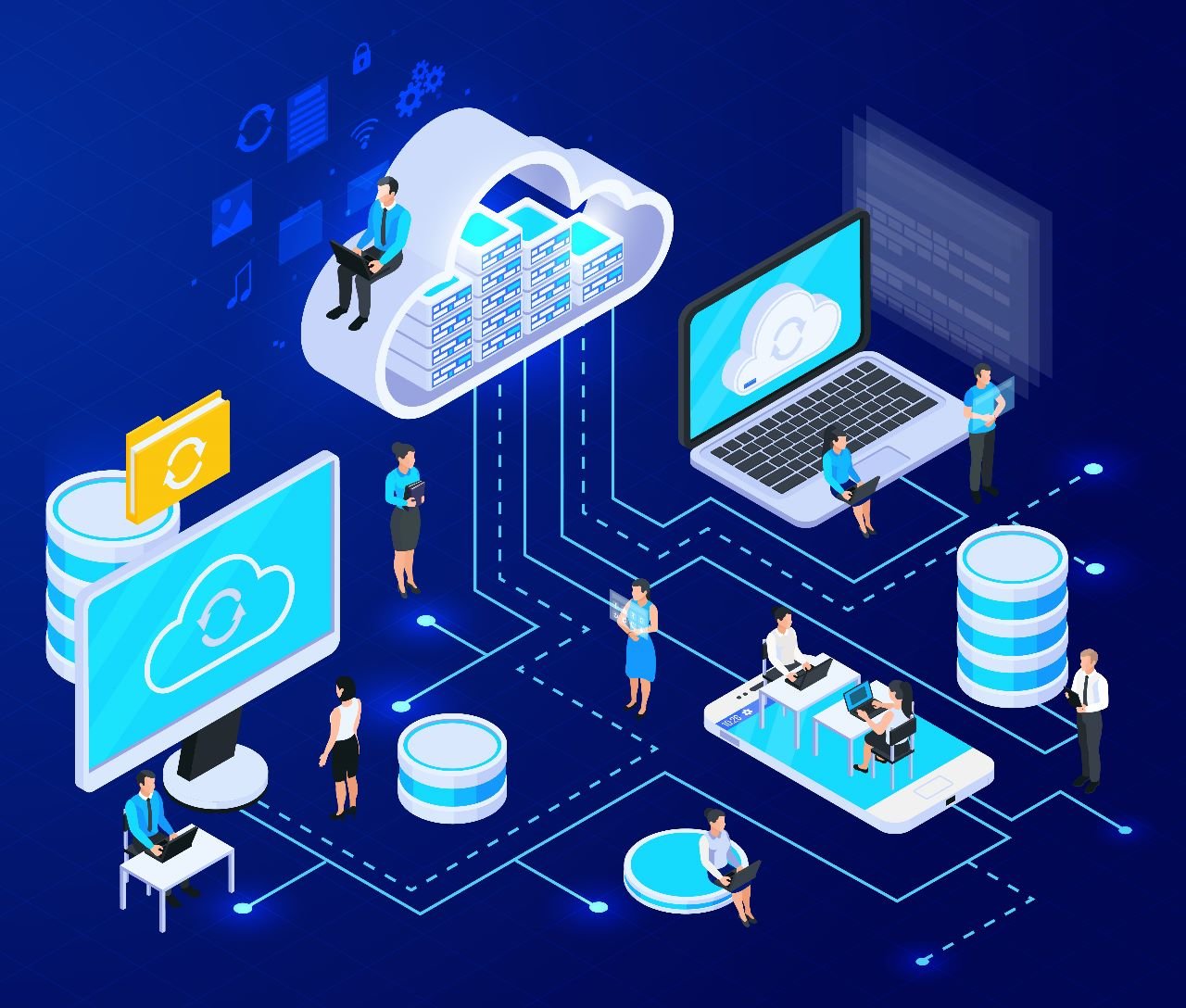
Cloud computing has quietly become one of the most important technologies behind modern business. Employees can access documents from almost anywhere, companies can launch digital services without building large physical data centers, and teams can collaborate on projects across different locations.
For many organizations, the cloud is no longer an optional technology experiment. It has become part of the basic infrastructure that allows businesses to operate.
From small businesses and freelancers to multinational corporations, cloud computing is changing how organizations store information, use software, communicate, and scale their operations.
What Is Cloud Computing?
Cloud computing refers to accessing computing resources over the internet rather than relying entirely on physical infrastructure owned and maintained by an organization.
These resources can include storage, servers, databases, applications, networking, and processing power.
Instead of purchasing a physical server and maintaining it in an office, a company can rent computing resources from a cloud provider and access them through the internet.
This model provides businesses with greater flexibility.
A company can increase its computing resources when demand grows and reduce them when demand falls, rather than purchasing hardware that may remain unused.
1. Employees Can Work From Almost Anywhere
One of the most visible effects of cloud computing is the ability to access work information from different locations.
Employees can work from an office, home, coworking space, or while traveling, provided they have an appropriate internet connection and authorized access.
Cloud-based documents, project management systems, communication platforms, customer databases, and other applications can all support distributed teams.
This has contributed significantly to the growth of remote and hybrid work.
Companies no longer need every employee to be physically present in the same building to collaborate effectively.
2. Collaboration Has Become Easier
Before cloud-based collaboration became widespread, employees often exchanged files through email or local storage devices.
This created problems with duplicate files and outdated versions.
Cloud-based collaboration allows multiple authorized users to access the same information.
Employees can edit documents, leave comments, review changes, and collaborate in real time.
This is particularly useful for teams working across different locations and time zones.
Instead of asking a colleague to send the latest version of a document, employees can work from a shared source.
3. Businesses Can Reduce Infrastructure Costs
Traditional IT infrastructure can require substantial investment.
Companies may need to purchase servers, networking equipment, storage systems, backup hardware, and other infrastructure.
They also need employees or external specialists to maintain that equipment.
Cloud computing changes the financial model.
Instead of making large upfront investments in physical infrastructure, organizations can pay for cloud services according to their needs.
This can be especially attractive to smaller businesses that may not have the budget or expertise to maintain extensive IT infrastructure.
However, cloud services are not automatically cheaper.
Organizations still need to monitor usage and control costs because poorly managed cloud environments can become expensive.
4. Businesses Can Scale More Easily
Growth can create significant technology challenges.
A company that suddenly gains thousands of new customers may need additional computing power, storage, and network capacity.
Traditional infrastructure may take significant time to expand.
Cloud platforms can provide greater flexibility.
Organizations can increase resources when demand rises and reduce them when demand falls.
This scalability is particularly valuable for businesses with seasonal demand or rapidly changing workloads.
An online retailer, for example, may experience much higher demand during major shopping periods than during ordinary weeks.
Cloud infrastructure can help accommodate those changes.
5. Software Is Becoming More Accessible
Cloud computing has also changed how businesses use software.
Instead of purchasing software once and installing it on individual computers, many applications are now delivered as online services.
This model is commonly referred to as Software as a Service, or SaaS.
Examples include accounting platforms, customer relationship management systems, project management applications, communication tools, and office productivity software.
Employees can often access these services through a web browser or application without managing complex local installations.
Updates can also be delivered centrally, reducing the need for employees to manually update software.
6. Cloud Computing Supports Remote Teams
Remote work requires more than video conferencing.
Employees need secure access to files, applications, databases, internal systems, and communication tools.
Cloud computing can provide much of this infrastructure.
A distributed workforce can therefore operate as a connected digital organization even when employees are located in different countries.
For businesses hiring internationally, this can significantly expand the potential talent pool.
At the same time, organizations need strong identity management and security controls to ensure that remote access does not create unnecessary risks.
7. Data Backup Is Becoming Easier
Data loss can have serious consequences.
Hardware failure, accidental deletion, theft, malware, and other incidents can make important files inaccessible.
Cloud storage and backup services can provide an additional layer of protection.
Organizations can automatically back up important information and maintain copies in different locations.
However, cloud storage should not be confused with a complete backup strategy.
Businesses need to understand how backups work, how long data is retained, and whether deleted or compromised information can be recovered.
Regular testing is also important. A backup is only useful if the organization can successfully restore the information when needed.
8. Security Is Changing
Cloud computing introduces both security benefits and new risks.
Major cloud providers can invest heavily in physical security, infrastructure protection, monitoring, and security technologies.
For some organizations, this may provide a level of infrastructure security that would be difficult to achieve independently.
However, moving data to the cloud does not eliminate cybersecurity responsibilities.
Businesses still need to manage passwords, authentication, permissions, devices, applications, and employee access.
One of the most common problems is excessive access.
Employees should only have access to the information and systems they actually need.
This principle can reduce the potential damage caused by compromised accounts.
9. Cloud Computing Is Enabling AI
Many modern artificial intelligence services depend heavily on cloud infrastructure.
AI systems require significant computing resources to process data and run sophisticated models.
Cloud platforms can provide access to this infrastructure without requiring every organization to purchase specialized hardware.
This makes advanced technologies more accessible to smaller companies.
Businesses can use cloud-based AI services for applications such as customer support, data analysis, content generation, forecasting, and automation.
As AI continues to develop, cloud infrastructure will likely remain an important part of its expansion.
10. IT Teams Are Becoming More Strategic
Cloud computing can change the role of IT professionals.
Instead of spending most of their time maintaining physical servers, IT teams may focus more heavily on architecture, cybersecurity, data management, automation, cloud governance, and system integration.
This requires a different set of skills.
Cloud professionals need to understand not only technology but also business requirements.
They need to determine which workloads should run in the cloud, how systems should communicate, how data should be protected, and how costs should be controlled.
11. Small Businesses Can Compete With Larger Companies
Cloud computing has helped reduce some of the technological barriers faced by smaller organizations.
A small company can access sophisticated software without developing everything internally.
It can use cloud accounting, marketing platforms, customer management systems, analytics tools, collaboration software, and online storage.
This allows small teams to perform tasks that previously required much larger technology departments.
The result is a more accessible digital economy in which technology can become an advantage for businesses of different sizes.
12. Employees Need New Digital Skills
As cloud services become standard workplace tools, employees need to understand how to use them effectively.
This does not mean everyone needs to become a cloud engineer.
However, employees should understand basic concepts such as secure file sharing, account permissions, cloud collaboration, data security, and responsible use of online services.
IT professionals may need more specialized skills in areas such as cloud architecture, security, databases, networking, and automation.
Continuous learning will become increasingly important as cloud platforms evolve.
Challenges Businesses Need to Consider
Despite its advantages, cloud computing has limitations.
Internet connectivity becomes more important when essential applications are hosted online.
Businesses can also become dependent on specific providers, making migration complicated if they later decide to change platforms.
Cloud costs can become difficult to manage if resources are not monitored carefully.
There are also regulatory and privacy considerations, particularly when businesses handle sensitive customer or employee information.
Organizations should therefore evaluate cloud services carefully rather than moving everything to the cloud without a strategy.
The Future of the Cloud Workplace
Cloud computing is likely to become increasingly invisible.
Employees may not think about where their applications or files are physically stored. They will simply expect to access the tools they need whenever and wherever they work.
The cloud will increasingly connect AI services, business applications, analytics platforms, communication tools, and automated workflows.
This could create workplaces where employees spend less time managing technology and more time using it to accomplish business objectives.
Conclusion
Cloud computing has fundamentally changed the modern workplace.
It has made remote collaboration easier, reduced barriers to sophisticated software, enabled businesses to scale more quickly, and created new opportunities for organizations of all sizes.
However, successful cloud adoption requires more than moving files and applications online.
Businesses need clear strategies for security, access management, cost control, data protection, and employee training.
The organizations that use cloud computing effectively will be able to create more flexible and connected workplaces while adapting more quickly to technological change.
The cloud is therefore not simply a place where businesses store data. It is increasingly becoming the digital foundation on which modern work operates.