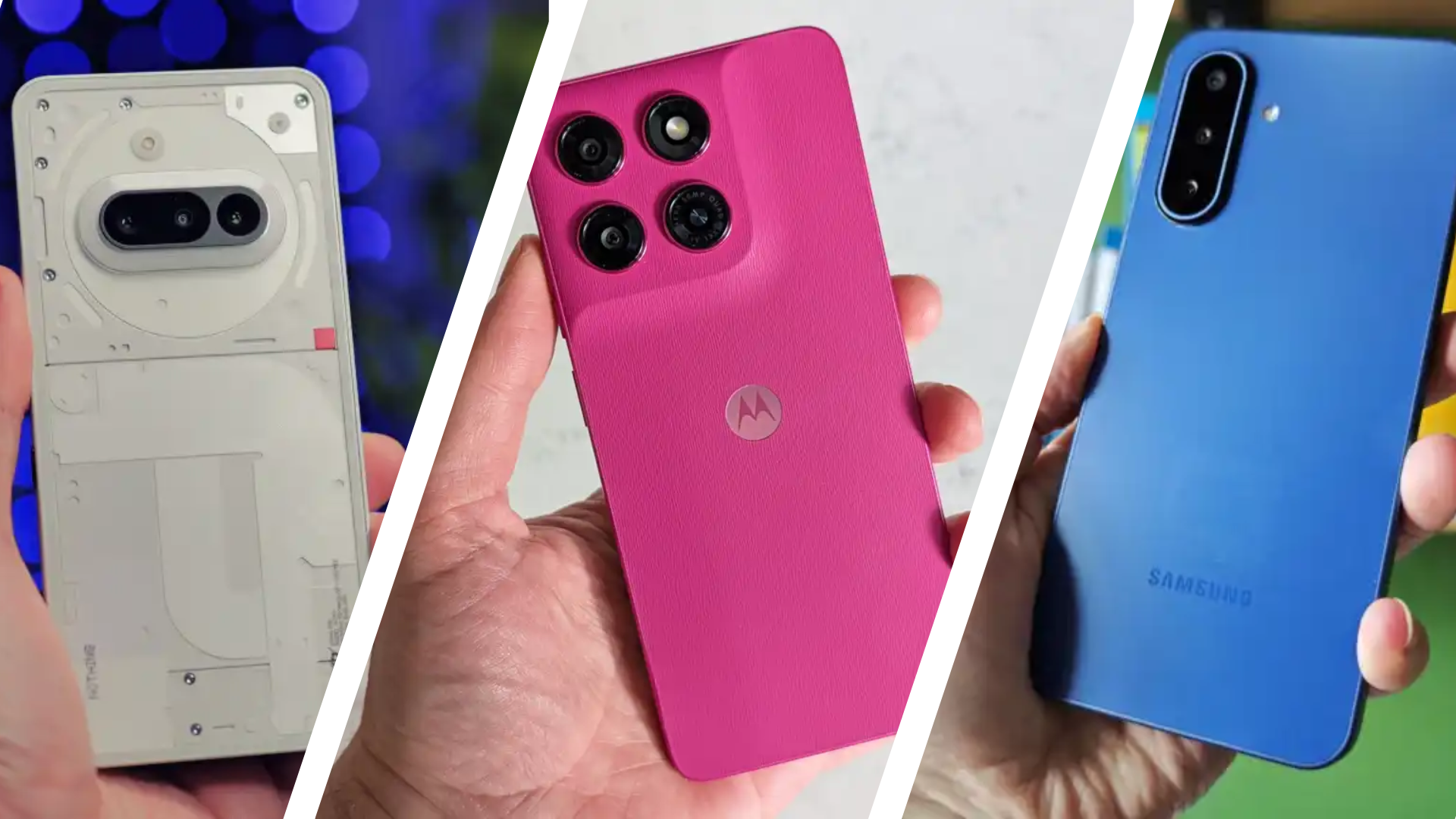
The challenge is identifying where each manufacturer has reduced costs. One phone may offer an excellent camera but slower charging. Another may deliver flagship-level performance while providing weaker regional availability. Some inexpensive phones look impressive on a specification sheet but receive too few software updates to remain a good long-term purchase.
The following smartphones strike convincing balances between price, design, performance, cameras, battery life, and longevity.
Affordable Premium-Feeling Phones at a Glance
| Smartphone | Ideal For | Display | Main Strength | Main Compromise |
|---|---|---|---|---|
| Google Pixel 10a | Photography and long-term ownership | 6.3-inch 120Hz OLED | Camera software and seven years of updates | Modest charging speed |
| Samsung Galaxy A57 5G | Balanced everyday use | 6.7-inch 120Hz Super AMOLED Plus | Display, durability, and software support | Macro camera adds limited value |
| Apple iPhone 17e | Affordable entry into Apple’s ecosystem | 6.1-inch Super Retina XDR OLED | A19 performance and 256GB starting storage | Single rear camera and 60Hz display |
| Nothing Phone (4a) | Distinctive design and clean software | High-refresh-rate AMOLED | Design and 12GB/256GB configuration | Limited availability in some markets |
| OnePlus Nord 6 | Performance, gaming, and battery life | 165Hz AMOLED | Fast processor, large battery, and 80W charging | Regional availability and variant differences |
Google Pixel 10a: Premium Photography Without the Pro Price
Choose it if: Camera quality and long software support matter more than gaming performance.
The Google Pixel 10a brings several flagship-style features into Google’s less expensive Pixel line. Its 6.3-inch Actua pOLED display supports an adaptive refresh rate from 60Hz to 120Hz and reaches a claimed peak brightness of up to 3,000 nits under supported conditions.
The dual-camera system combines a 48-megapixel main camera with optical stabilization and a 13-megapixel ultrawide camera. Google’s strength lies in computational photography rather than an excessive number of camera lenses. Features such as Night Sight, Macro Focus, Face Unblur, Best Take, Magic Eraser, and Photo Unblur help produce usable results without requiring extensive manual editing.
Google includes 8GB of memory and offers 128GB or 256GB of storage. The 5,100mAh typical battery is rated for more than 30 hours under Google’s testing, and Qi wireless charging is included—a feature that is still frequently omitted from midrange Android phones.
The strongest reason to consider the Pixel 10a is its support policy. Google promises seven years of operating-system, security, and Pixel Drop updates. Its IP68 rating and aluminum frame also make it feel closer to a flagship than many similarly positioned devices.
Charging is less impressive than on competing OnePlus models, and buyers in unsupported countries should investigate repair options, network bands, warranty coverage, and access to Pixel-specific calling features.
- Advantages: Excellent camera software, 120Hz OLED, wireless charging, IP68 protection, seven years of updates
- Limitations: Charging adapter sold separately, slower charging than several rivals, limited official availability in some countries
Samsung Galaxy A57 5G: The Most Balanced Midrange Choice
Choose it if: You want a dependable all-rounder with a large screen and long support.
The Samsung Galaxy A57 5G looks and feels more expensive than a conventional budget phone. Its slim 6.9mm body, reduced display bezels, and 6.7-inch FHD+ Super AMOLED Plus screen create a polished first impression.
The display supports a 120Hz refresh rate, making scrolling, animations, and compatible games appear smoother. Samsung’s Vision Booster is designed to improve visibility in changing lighting conditions.
The rear camera system includes a 50-megapixel main camera with optical stabilization, a 12-megapixel ultrawide camera, and a 5-megapixel macro camera. The stabilized main camera is the most important of the three; the macro lens is more of a supporting feature than a reason to purchase the phone.
A 5,000mAh typical battery supports Samsung’s Super Fast Charging 2.0, with the company claiming up to 60% charge in 30 minutes under specified conditions. Its IP68 rating is particularly welcome at this price level.
Samsung promises up to six operating-system upgrades and six years of security updates. This makes the A57 5G a stronger long-term purchase than a cheaper phone that stops receiving meaningful updates after only a few years.
- Advantages: Large 120Hz AMOLED display, stabilized main camera, IP68 rating, six years of security support
- Limitations: No flagship telephoto camera, charging adapter may not be included, some preinstalled Samsung applications duplicate Google services
Apple iPhone 17e: A Less Expensive Route into the Apple Ecosystem
Choose it if: You want a current iPhone and value performance, longevity, and Apple integration.
The iPhone 17e is not inexpensive in the same way as an entry-level Android phone. It is better understood as Apple’s lower-cost current-generation option.
It uses the A19 chip from the same processor generation as the wider iPhone 17 family. This gives the 17e enough performance for demanding applications, high-end games, photo editing, and several years of software updates.
The phone has a 6.1-inch Super Retina XDR OLED display, an aluminum frame, Ceramic Shield 2 on the front, Face ID, USB-C, an Action button, and MagSafe charging at up to 15W. Starting storage is a generous 256GB.
Apple uses a single 48-megapixel Fusion rear camera. It can produce high-resolution images and an optical-quality 2x view by cropping the main sensor, but it cannot replace a genuine ultrawide camera. That is an important limitation if you regularly photograph buildings, interiors, landscapes, or large groups.
The other compromise is the display’s conventional 60Hz refresh rate. Android competitors commonly provide 120Hz screens at lower prices. Nevertheless, the combination of A19 performance, iOS, MagSafe, dependable video recording, and integration with Macs, iPads, Apple Watches, and AirPods creates a convincingly premium experience.
- Advantages: Powerful A19 chip, 256GB starting storage, MagSafe, strong ecosystem, compact size
- Limitations: More expensive than many Android midrange phones, 60Hz display, no ultrawide camera
Nothing Phone (4a): Premium Design Without Looking Generic
Choose it if: You want a smartphone with personality and streamlined software.
The Nothing Phone (4a) demonstrates that affordability does not have to produce forgettable design. Its transparent-influenced styling, aluminum details, curved form, glass back, and Glyph interface give it a recognizable identity.
The currently promoted configuration includes 12GB of memory and 256GB of storage—specifications that provide generous room for multitasking, applications, photos, and downloaded media. Nothing also promotes a three-camera system and Essential AI tools within Nothing OS.
Nothing OS is visually distinctive without feeling excessively cluttered. The Glyph system can surface selected information through lights on the back, potentially reducing the need to turn on the screen for every alert.
The main concern is availability. Nothing’s sales channels, network certification, accessories, and repair support differ considerably by country. Before importing one, verify local 4G and 5G bands, warranty eligibility, eSIM or physical-SIM support, and access to replacement parts.
- Advantages: Distinctive appearance, generous memory and storage, clean interface, useful notification system
- Limitations: Regional availability, smaller accessory ecosystem, local repair support may be limited
OnePlus Nord 6: Performance and Battery Life Take Priority
Choose it if: You want fast performance, gaming features, rapid charging, and a large battery.
The OnePlus Nord 6 is the performance-focused option in this group. OnePlus pairs a Snapdragon 8-series processor with LPDDR5X memory and UFS 4.1 storage, technologies commonly associated with more expensive devices.
Its AMOLED display supports refresh rates up to 165Hz in compatible situations. That specification is particularly relevant to mobile gamers, although not every application or game will operate at the maximum refresh rate.
OnePlus promotes a very large battery, 80W wired charging, a 50-megapixel Sony main camera with optical stabilization, and a 32-megapixel front camera. The phone also carries multiple water- and dust-resistance certifications, although water resistance can degrade with age and is not a guarantee against liquid damage.
The update commitment covers four Android operating-system updates and six years of security updates. That is respectable, although Google’s Pixel support period is stronger.
Nord models are not sold through the same channels in every country. Battery capacity, memory configurations, network compatibility, included chargers, and supported features can vary between regional versions, so confirm the exact model before ordering.
- Advantages: Fast processor, 165Hz AMOLED, large battery, 80W charging, stabilized main camera
- Limitations: Availability varies, no clear advantage for casual users who do not game, regional specifications may differ
What Makes an Affordable Phone Feel Premium?
A High-Quality OLED Display
The screen is the component you interact with most often. An OLED panel with good outdoor brightness, accurate colors, narrow bezels, and a 120Hz refresh rate can make a moderately priced phone feel considerably more expensive.
A Capable Main Camera with Stabilization
Do not judge a camera system by megapixels or the number of lenses alone. A good primary sensor, optical image stabilization, reliable processing, and consistent autofocus are more valuable than a low-resolution macro camera added for marketing purposes.
Long Software Support
A lower purchase price becomes less attractive if the phone stops receiving security patches prematurely. Longer support also increases the possibility of keeping the phone for several years or selling it later.
Thoughtful Construction
An aluminum frame, strengthened glass, responsive buttons, good vibration feedback, stereo speakers, and water resistance all contribute to a premium experience. A glass back may look expensive, but it also increases the importance of using a protective case.
Check These Details Before Buying
- Network bands: Confirm compatibility with your carrier’s 4G and 5G frequencies, especially when importing a phone.
- SIM configuration: Check whether the phone supports physical SIM cards, eSIM, or both.
- Warranty: Imported devices may not qualify for local repairs or replacement.
- Charging accessories: Several manufacturers no longer include a wall charger.
- Storage: Many modern phones do not support microSD cards, making the original storage choice important.
- NFC and mobile payments: Hardware support does not guarantee that every payment service works in your country.
- Camera needs: Decide whether you genuinely need ultrawide, telephoto, or advanced video capabilities.
Frequently Asked Questions
How much should I spend on a good smartphone?
The strongest value is usually found in the middle of the market rather than at the absolute bottom. Spending slightly more for a better display, longer update policy, stabilized camera, and stronger construction can reduce the need to replace the phone early.
Is a midrange phone fast enough for gaming?
Yes, for most games. Performance-focused models such as the OnePlus Nord 6 are better suited to high frame rates and demanding settings. Sustained performance also depends on cooling, ambient temperature, and game optimization.
Should I buy an older flagship instead?
An older flagship may provide better cameras, materials, or wireless charging. A new midrange phone may offer a fresher battery, longer remaining warranty, and more years of software support. Compare the exact devices rather than assuming either category is automatically superior.
Is the iPhone 17e really a budget phone?
It is Apple’s value-oriented current model, but it costs more than many Android midrange phones. Its value comes from processor performance, starting storage, software support, resale potential, and Apple ecosystem integration—not from being the cheapest option.
Final Recommendation
The Google Pixel 10a is the strongest choice for photography and long software support. The Samsung Galaxy A57 5G is the most balanced option, combining a large AMOLED display, water resistance, versatile cameras, and six years of security updates.
Choose the iPhone 17e if you want a current, long-lasting entry into Apple’s ecosystem. The Nothing Phone (4a) is ideal for buyers who value original design, while the OnePlus Nord 6 delivers the most appealing combination of performance, battery capacity, and rapid charging.
Before purchasing any imported smartphone, verify network compatibility and local warranty support. A phone is only a bargain if it works properly on your carrier and can be repaired when something goes wrong.